



Notice board 4 - Pilgrimages: Rome and the seven churches
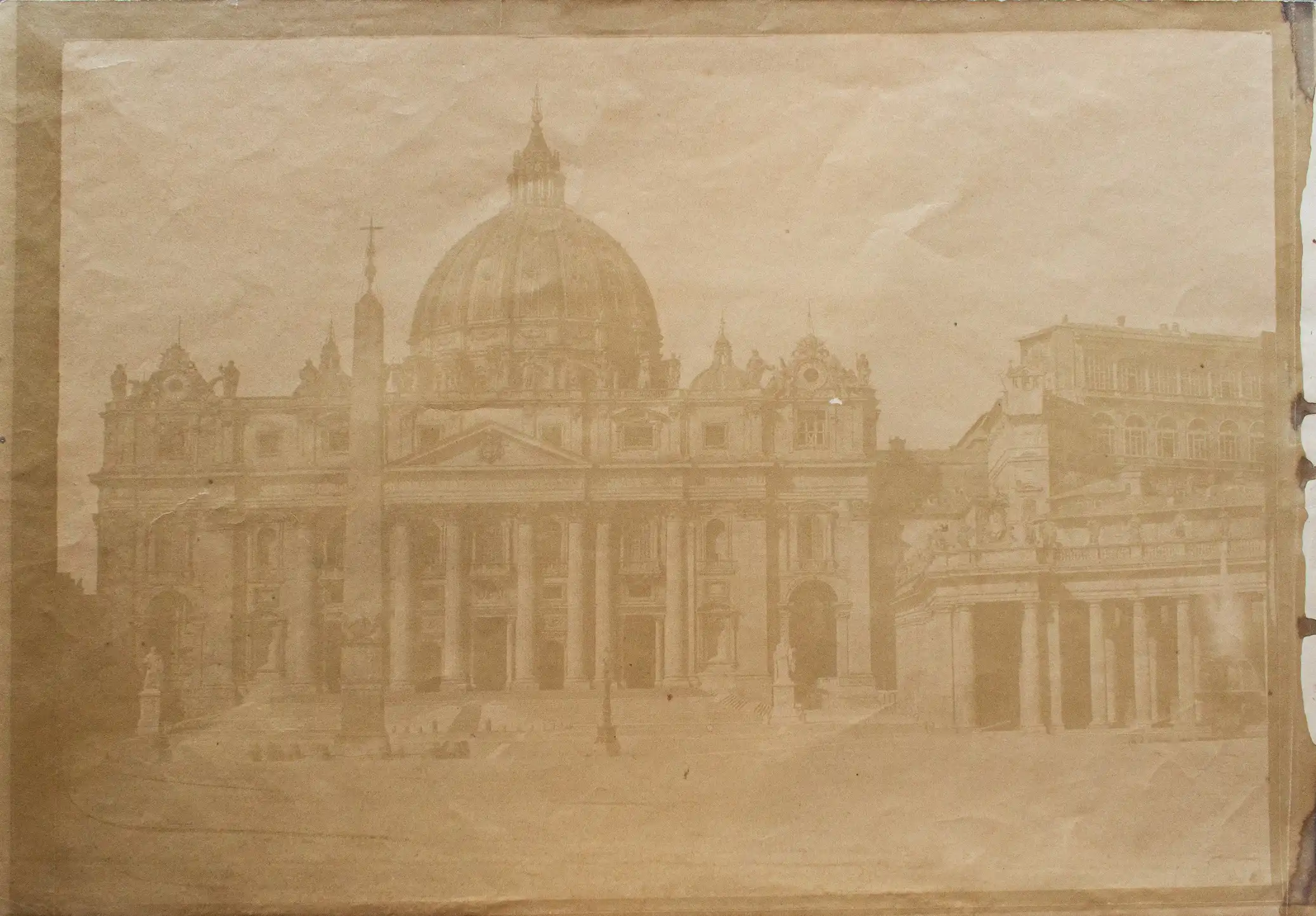
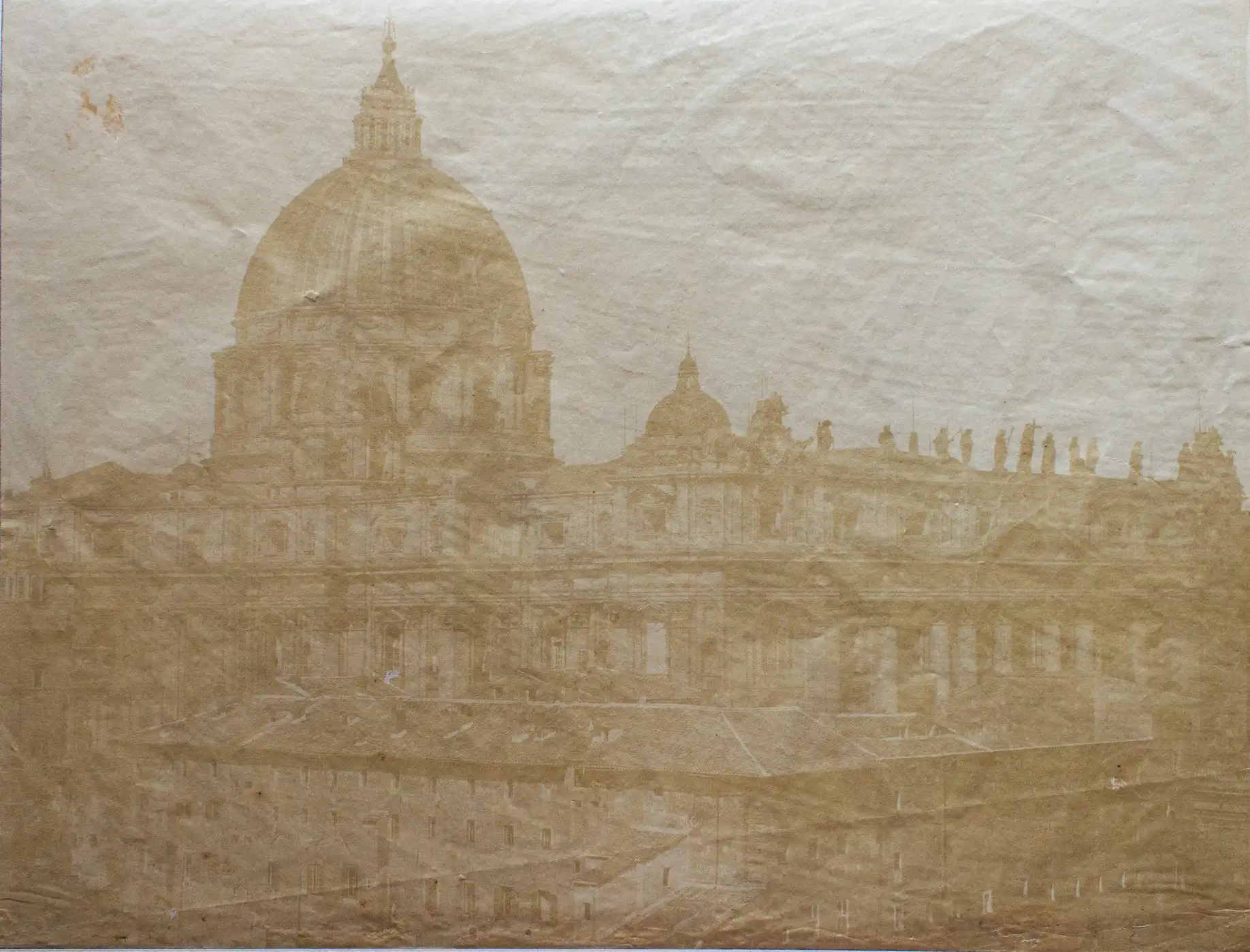
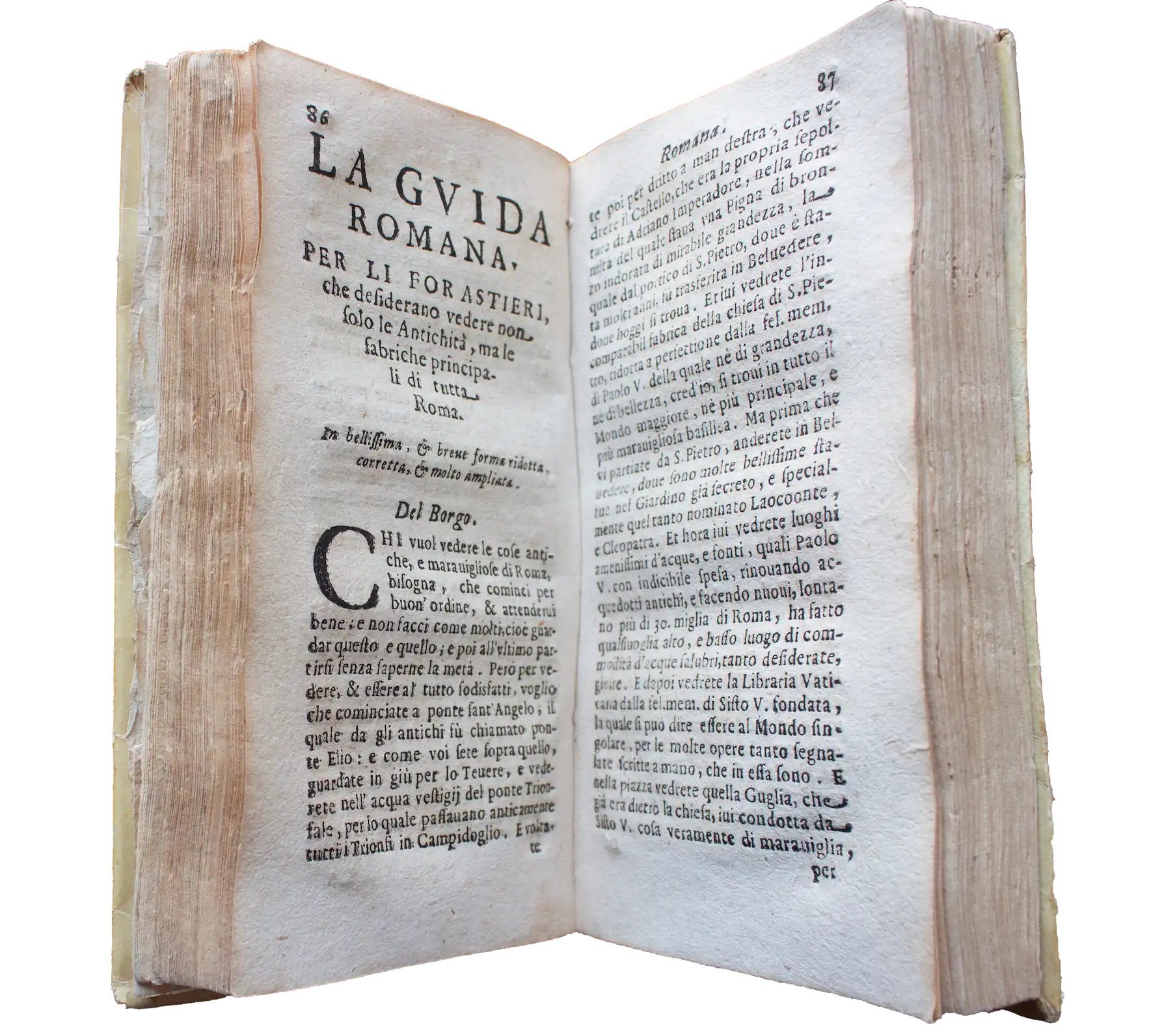
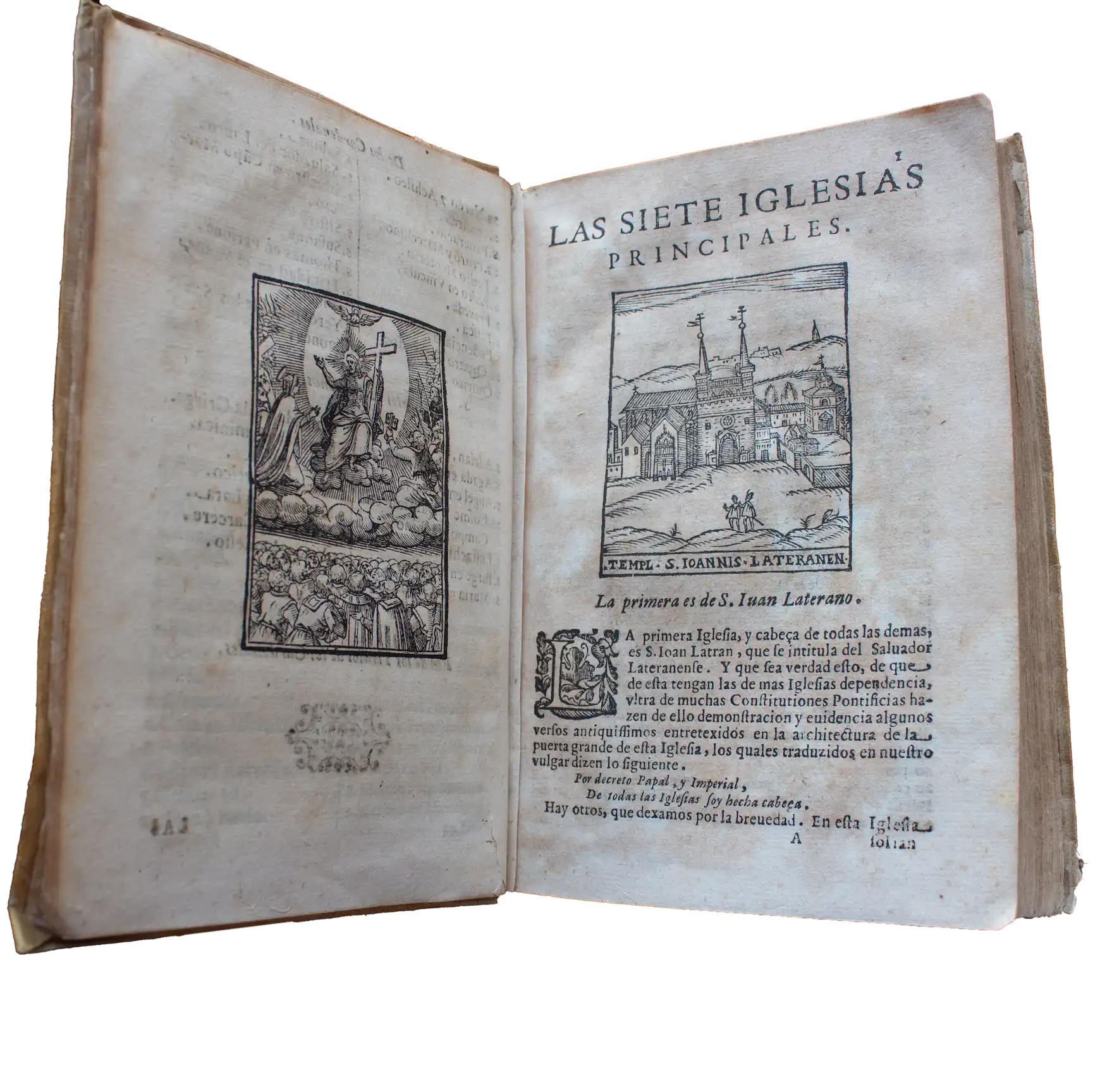
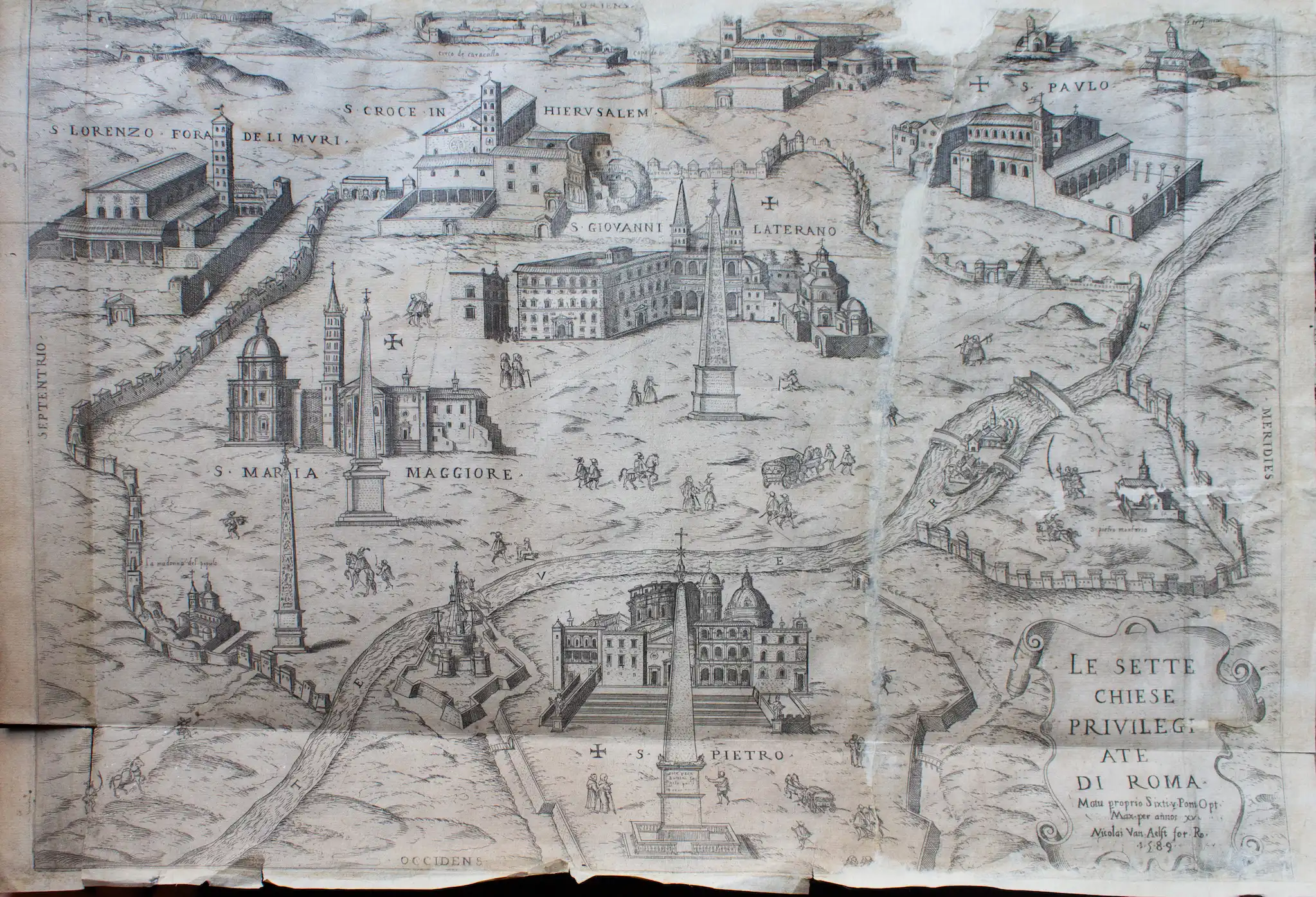
The pilgrimage to the seven churches, often remembered as a jubilee practice, was actually conceived by St. Philip Neri in the 16th century as an alternative to the Roman carnival. It is an itinerary of about 25 kilometers that winds through the city, reaching the Roman countryside, the catacombs, and the minor and major basilicas. The journey allows pilgrims to enjoy a devotional and penitential experience, rediscovering and retracing the beauty and history of Rome. This practice originated in the 7th century, with the custom of visiting the city's basilicas and antiquities; there is a wealth of documentation on this Roman tradition. Some of these, owned by the Angelica Library, are true descriptions of ancient and modern Rome, some similar to pocket guides, others enriched with accurate illustrations.
Salted paper
Salted paper was one of the first sensitive papers used in photography. The method was devised by William Henry Fox Talbot, the creator of the calotype. This practice originated in 1833. Usually, images obtained with this technique have tones ranging from sepia to brown-violet, and since the paper itself is soaked in the solution, the effect obtained is similar to that of a watercolour. The technique consists of treating a sheet of paper with a solution of sodium or ammonium chloride, allowing it to dry and adding a colloid, such as gelatin or albumin, to increase the brightness of the image. When using this technique, the photographer must sensitise the prepared sheet with a solution containing silver nitrate, dry it and expose it to light. The image is formed by direct blackening inside a printing press where the sheet was placed in contact with the negative. Sunlight acts directly on the silver halide, leading to the formation of the metallic silver image. Once exposed, the image is rinsed and then fixed with sodium thiosulphate and washed again.