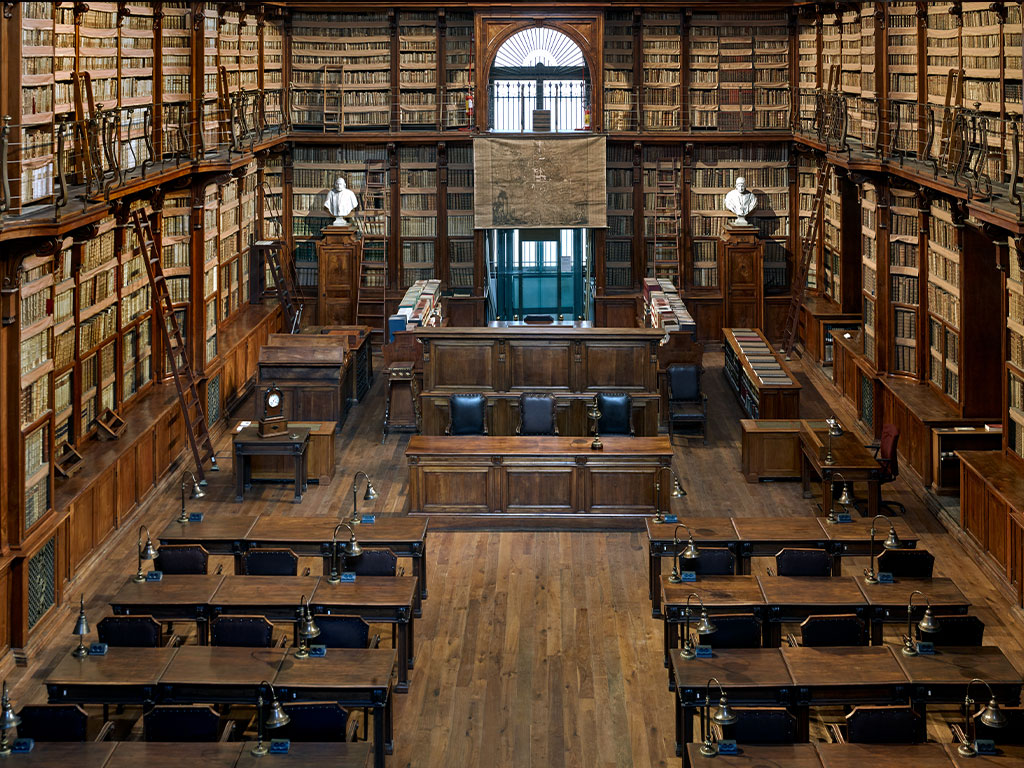
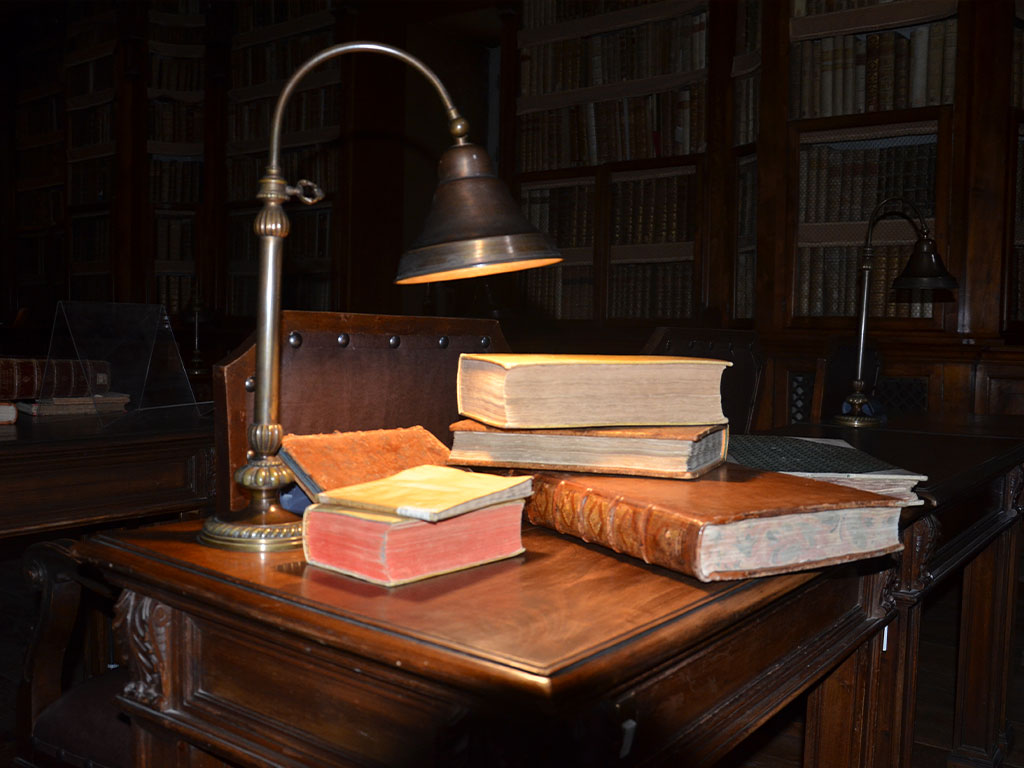

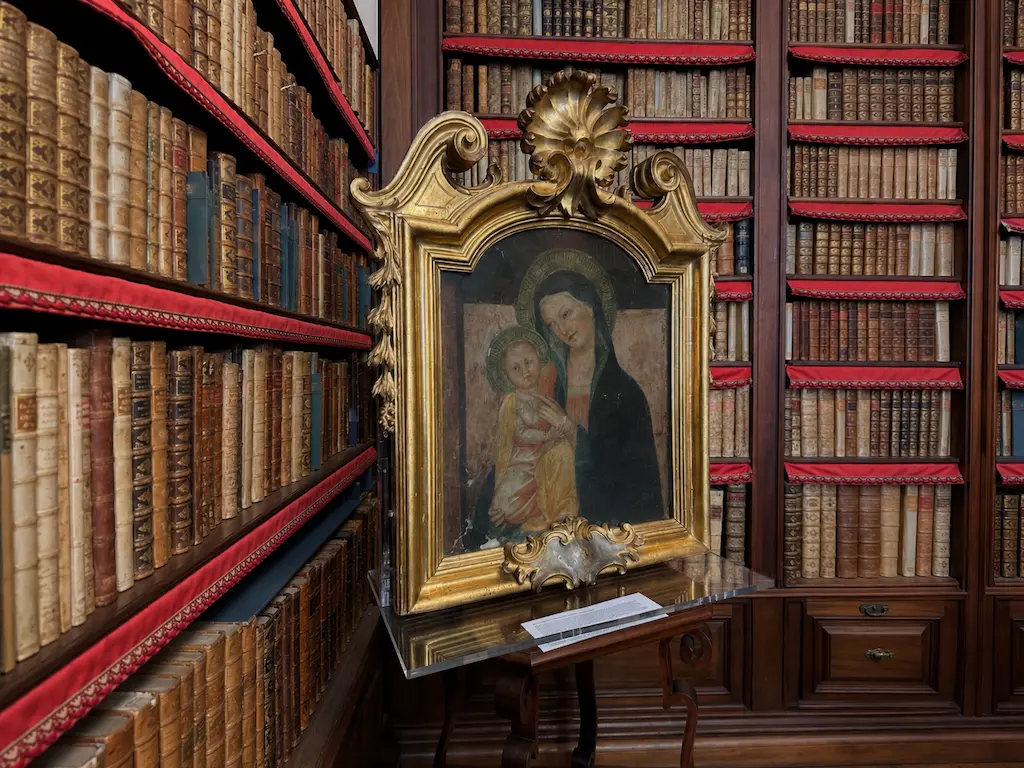

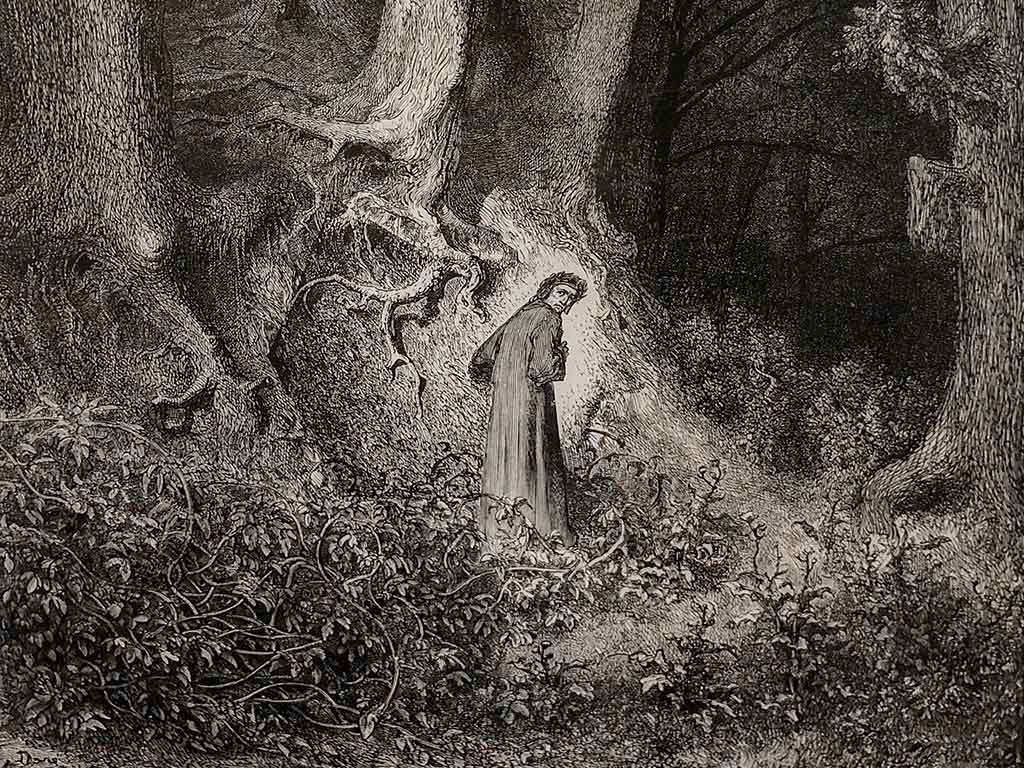


There are approximately 1,100 incunabula, including: Cicero's De Oratore, the first book printed in Italy in Subiaco in 1465 (Inc. 505/3), St. Augustine's De Civitate Dei, printed in Subiaco in 1467 (Inc. 149), a copy of the first Italian edition of Pliny's Historia naturalis printed in Venice in 1476 (Inc. 530), a copy of the first edition of the Divine Comedy, printed in Foligno in 1472 (Inc. 448), and Francesco Colonna's Hypnerotomachia Poliphili, printed by Aldo Manuzio in Venice in 1499 (Inc. 590).
There are approximately 20,000 cinquecentine books, including a rare edition of Orlando Furioso, published in Ferrara in 1521 (Rari I.3.1) and Camillo Agrippa's Trattato di scientia d'arme, published in Rome in 1553 (Rari I.5.1).
The volumes by Angelo Rocca
The first substantial collection consists of the books bequeathed by Angelo Rocca to the Convent of St Augustine in the late 16th century. These include Aristotle’s Opera omnia in Aldo Manuzio’s editio princeps, 1495–1498.
The volumes of Lucas Holstenius
In 1661, approximately 3,500 volumes were added, which Lucas Holstenius (1596-1661) left to the Library, including several works by the greatest ancient and modern geographers, which he had densely annotated.
The volumes by Enrico Noris
In the first half of the 18th century, special authorisation to possess prohibited books allowed works that were subject to censorship and forbidden to read to be preserved, such as the prestigious library collection of Enrico Noris (1631-1704), comprising around 600 volumes.
The volumes by Domenico Passionei
In 1762, the rich library of Cardinal Domenico Passionei (1682-1761) was acquired, containing rare books, incunabula and volumes on various subjects.
The volumes of the Massimo family
Between 1883 and 1884, the library of Prince Camillo X Carlo Alberto Massimo (1836–1921) was acquired. The contract of sale was drawn up between Ettore Novelli, then director of the Biblioteca Angelica, and the bookseller Cioffi, who was in charge of the sale: in March 1883, the 158 printed volumes (containing some 428 works relating to the 16th–19th centuries and providing an insight into the social, political and cultural life of Rome) were recorded in the Biblioteca Angelica’s chronological register of acquisitions.
The Bodonian Coolection
The Bodoni collection comprises 540 items documenting the work of the Parma-based printer Giambattista Bodoni from his earliest years. Most of the works were acquired in 1919 by the Venetian Count Nicolò Papadopoli, thereby expanding the original collection of around 50 Bodonian editions that had been held at Angelica since the late 18th century, thanks to the efforts of the Augustinian friar Agostino Giorgi, prefect of the library from 1752 to 1797, who was an admirer of the work carried out by the young Bodoni at the Propaganda Fide Printing House.
Among other works, the Library possesses a copy of Epithalamia exoticis linguis reddita (1775), containing a dedicatory inscription to Father Giorgi, the Alphabetum Tibetanum (1762), written by him, and the Euchologion (1764), works published by the Propaganda Fide Printing House and valuable evidence of the young Bodoni's apprenticeship in Rome.
The Santangelo Collection and Opera Librettos
The collection of Nicola Santangelo (1785-1851), Minister of the Interior of the Kingdom of the Bourbons between 1831 and 1847, arrived at Angelica between 1873 and 1886 during the years of the transition of management from the Augustinians to the Italian State.
The most substantial part of the collection consists of around 1,000 opera librettos, bound into volumes together with comedies, tragedies and translations of French plays, which form the theatre section of the collection. Finally, further volumes containing academic papers and treatises – extracts from the proceedings of the Accademia Pontaniana, the Società di storia e antichità, or the Accademia Ercolanese – in the form of pamphlets that rarely exceed 50 pages, provide an overview of 18th-century Neapolitan scientific and literary scholarship.
The libretto texts date back to a historical period ranging from the first half of the 18th century to the second half of the 19th century. Together with a group of about 60 comedies, farces and one-act plays written for the Neapolitan mask of Pulcinella, they are a valuable testimony to southern Italian musical culture, particularly that of Naples.
Statutes Collection
The Angelica Library among its collections has an important collection of statutes relating to the city of Rome.
These are volumes and pamphlets dating chronologically from the 16th to the 19th century.
An inventory of this material was drawn up at the end of the 19th century, listing 1,351 items, with the works arranged by ‘keyword’ under the relevant confraternity or organisation, and giving the title, place, year of publication and location. Many of them relate to the religious congregations that emerged after the Council of Trent, with the specific aim of supporting the Catholic faith, which was under threat from the spread of Protestantism; others relate to the arts and crafts and provide an insight into daily life in Rome in centuries past.
Ancient Periodicals Collection
There are more than 150 historic periodicals in the collection, most of which date from the second half of the 17th century to the first half of the 18th century. These are very often complete copies, which, to a certain extent, are found in Italy – or in Rome – only in the Biblioteca Angelica.
Alongside a clear prevalence of scholarly journals, the bibliothèques savantes, and literary journals such as the Mémoires de littérature (1715-1717) or the Mémoires historiques et critiques (1722), the collection also includes general news journals, historical and political magazines, specialised journals, mercuri, gazettes and newspapers such as the Spectator or Choix littéraire.
Worthy of note is the collection of French-language magazines and newspapers published in the Netherlands by French Huguenots following the revocation of the Edict of Nantes (1685).
The original and largest collection of periodicals held at Angelica belonged to Domenico Passionei’s private library