

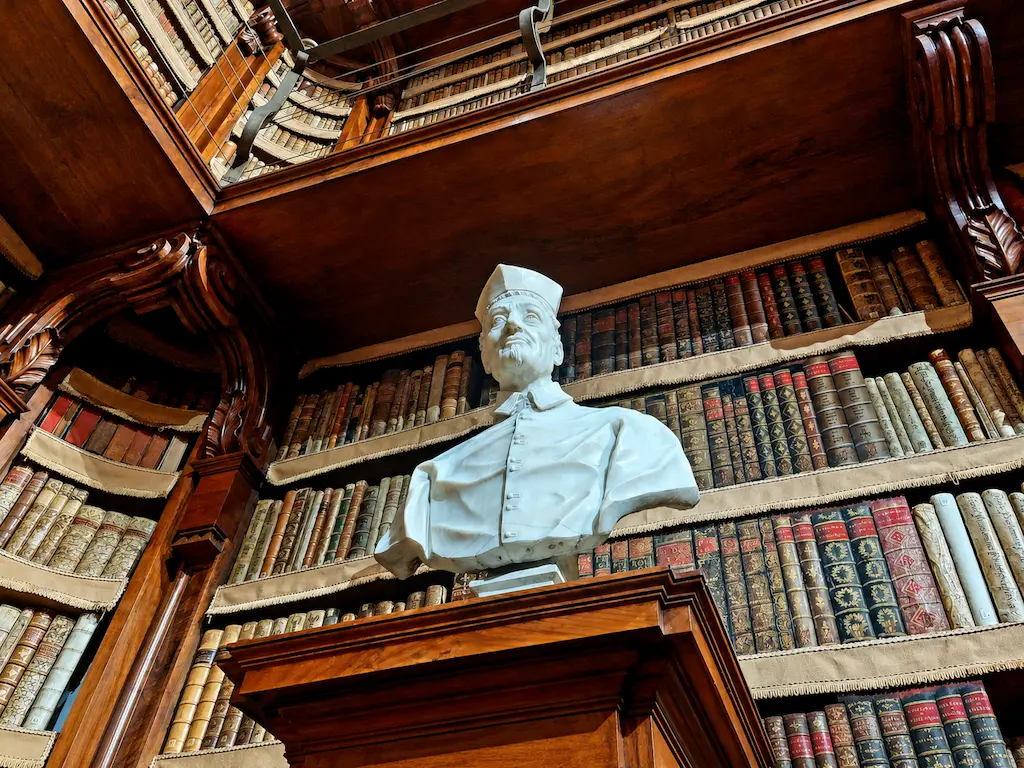


There are 163 ancient periodicals preserved in the Angelica Library, mainly dated between the second half of the 17th century and the first half of the 18th century: these are very often complete specimens, to some extent found, in Italy or Rome, only in the Angelica Library.
Alongside a clear predominance of learned journals, the "bibliothèques savantes," and literary journals such as the Mémoires de littérature (1715-1717) or the Mémoires historiques et critiques (1722), the collection also preserves general information journals-in the fields of fine-letters, sciences, history, religion, social life-historical and political journals, specialized newspapers (in "Sciences and Arts," in "Religion," or in "Bibliography"), "mercuri," gazettes and newspapers of the "Spectator" type, or of the "Choix littéraire" type.
Within the aforementioned variety most represented in the collection-that is, learned and literary journals-noteworthy is the collection of Francophone journals and gazettes published in Holland by the French Huguenots, following the revocation of the Edict of Nantes (1685).
The original and most numerous nucleus of periodicals preserved in Angelica belonged to Domenico Passionei's private library, and reflected, even in this, in the broad and open perspective of the selection of newspapers it contained, the richest and freest bibliographic endowment that could be had in Rome, in the heart of Catholic intransigence.