

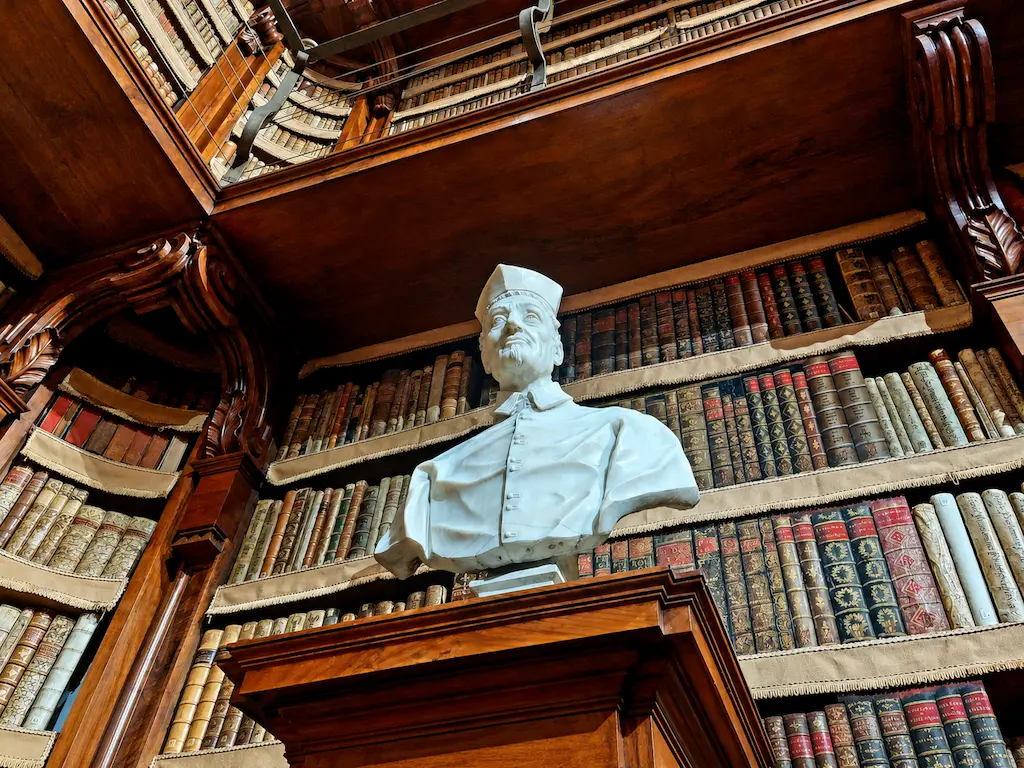


 Born in Seravezza (Lu) in 1696, he entered the Augustinian Order in 1711, completing his theological studies at the convent of Santo Spirito in Florence and San Giacomo in Bologna. In 1719 he became a reader in philosophy and from then on devoted himself to teaching and preaching in various cities in central Italy. In 1733 he was declared master of theology and sent to Bologna where he remained as regent until 1735 when he was called to Rome. He worked in Angelica from 1735 to 1745 when the last of the eight volumes of De theologicis disciplinis was completed ; despite the controversy the text attracted over its author and the entire Order, in 1746 Prior General Augustine Gioia mandated its use for the study of theology in all seminaries. In 1746 Berti became librarian of the Angelica Library but in 1748 he preferred to leave Rome, accepting the chair of ecclesiastical history at the University of Pisa because his work had attracted wide acclaim among the Italian Jansenists and he found himself in a very difficult situation: his position was now compromised and in 1754, although his writings had never been declared outside orthodoxy, Pope Benedict XIV prevented his appointment to the office of General of the Order. In 1766 Berti died in Pisa where he had taken refuge again after publishing his last self-defense against the charge of Jansenism. At the convent in Pisa remained his Library.
Gianlorenzo Berti