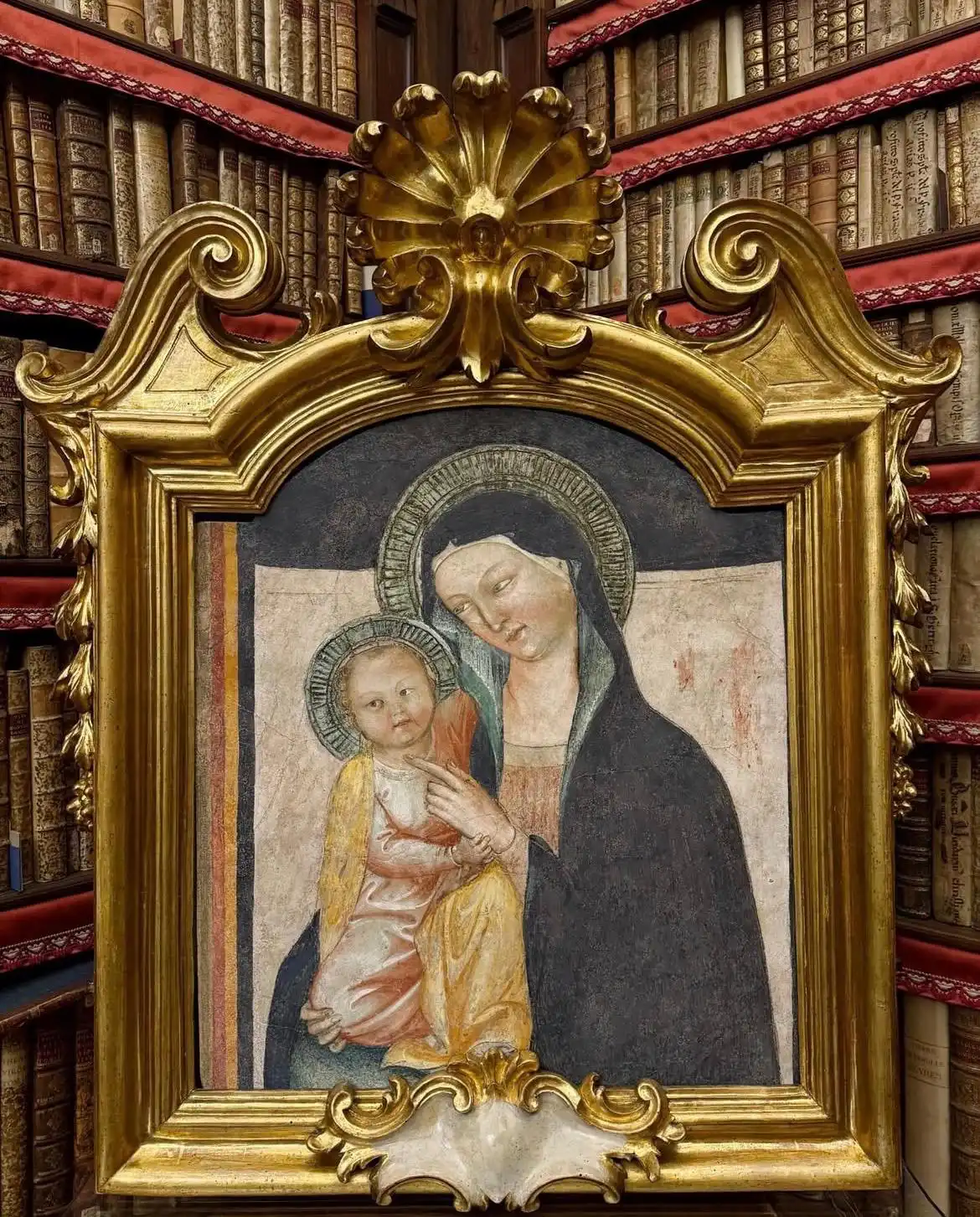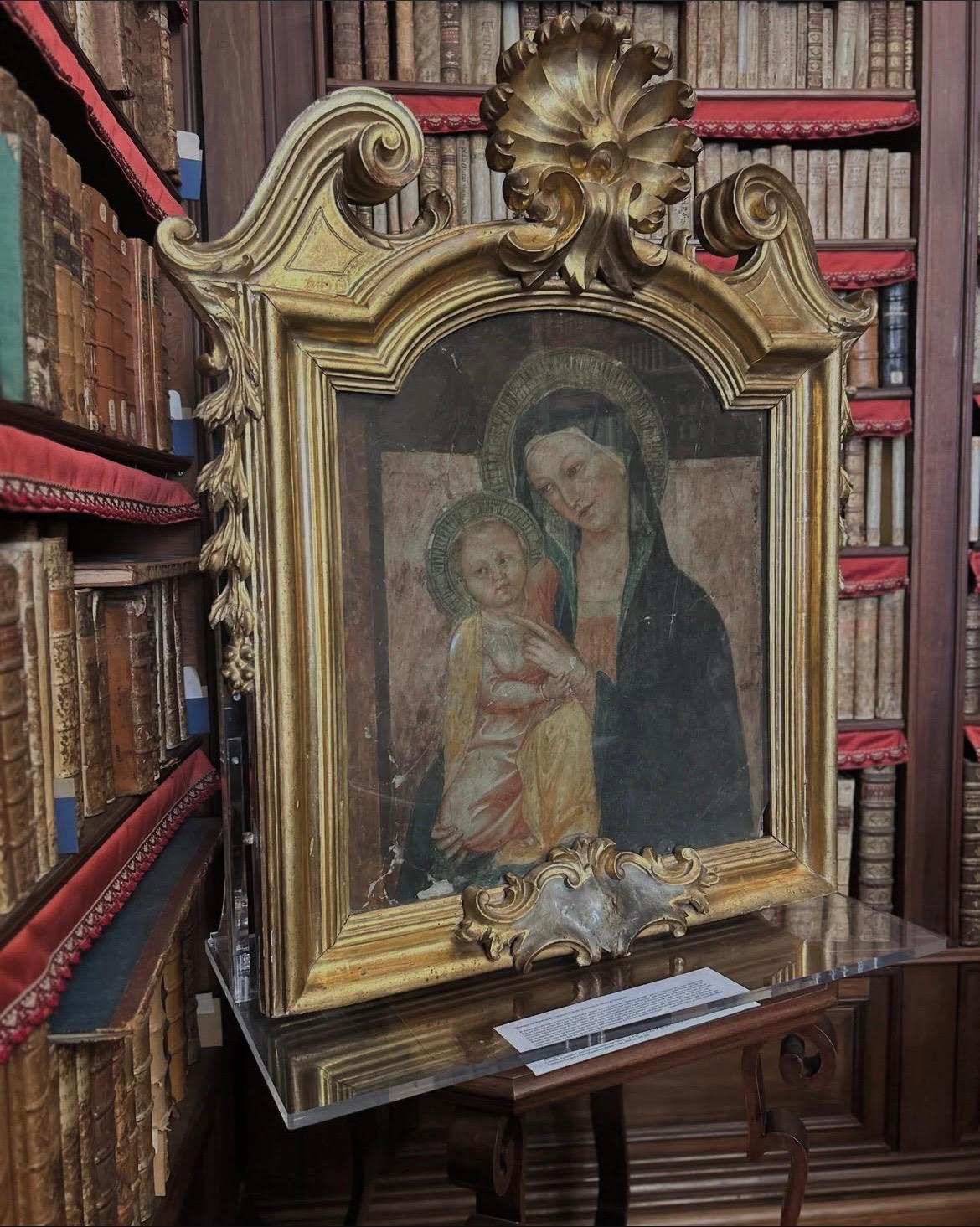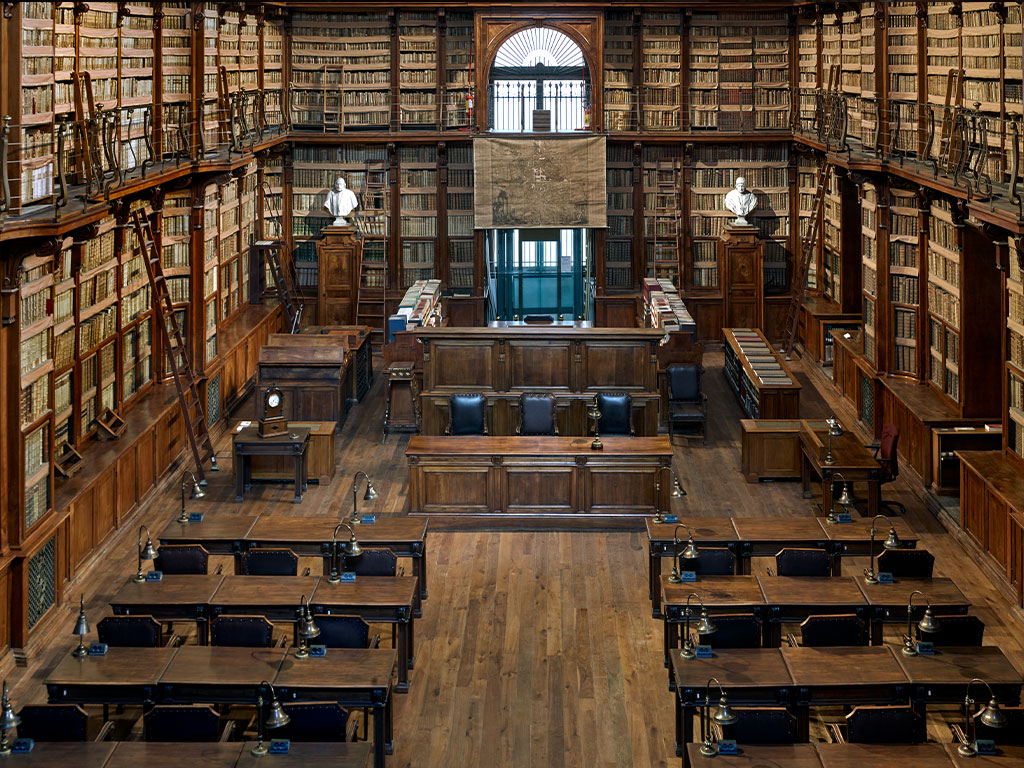




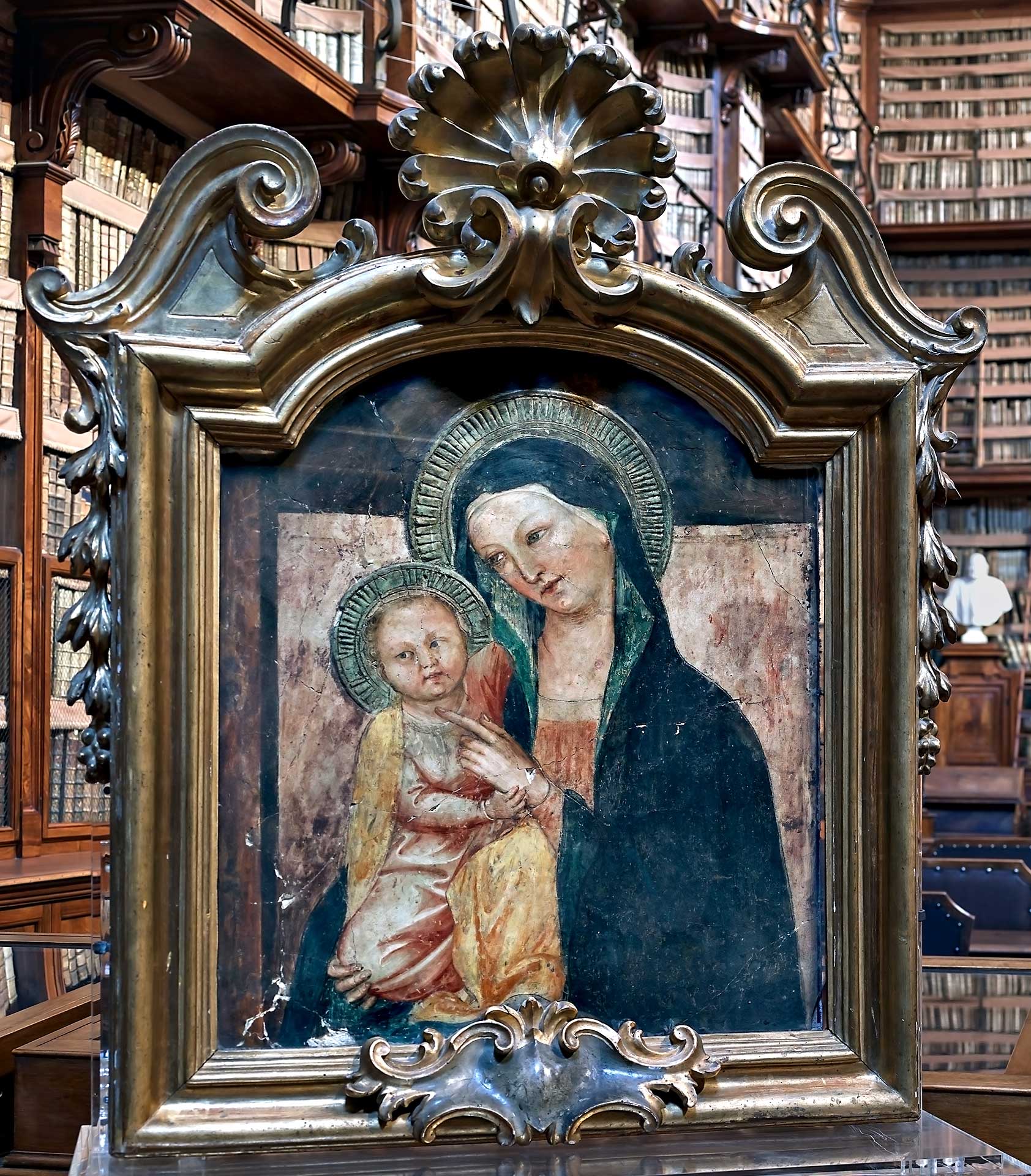
The wall painting displayed within an important gilded frame in the Vanvitelliano Hall is the work of the 'Maestro di Beffi', a painter and miniaturist from Abruzzo who lived between the end of the 14th and the first half of the 15th century. The fresco came from San Trifone in Posterula, on today's Via della Scrofa, since 1287 the Roman church of the Augustinian Order before the construction of St. Augustine's. The detachment by tearing took place in 1736, during the demolition of San Trifone, to allow the extension of the convent designed by Luigi Vanvitelli.
Part of a larger figuration, on the throne with the back covered by a drape of honour, the fresco depicts a Madonna 'of the tickle', so called because of the delicate touch of the Virgin's finger on the Child's neck.
Regarding the dating, it is believed that the painting is slightly later than the pictorial decoration of the triumphal arch and the apsidal presbytery of San Silvestro in L'Aquila (c. 1405), but that the artist's Roman experience predates the execution of the Beffi Triptych in the Museo Nazionale d'Abruzzo, from the church of Santa Maria del Ponte in Tione (1410-1415).
Bibliography: Cristiana Pasqualetti, Una vacanza romana del "Maestro di Beffi", in Unpublished Mediœvalia. Writings in honour of Francesco Aceto , edited by Francesco Caglioti and Vinni Lucherini, Rome, Viella, 2019, pp. 295-302.
The restoration of the ‘Madonna del Solletico’
In June 2025, the restoration of the ‘Madonna del Solletico’ was completed. This detached fresco, originally from the now-demolished church of S. Trifone in Posterula, is attributed to the ‘Maestro di Beffi’ (late 14th – first half of the 15th century). A work of extraordinary delicacy, housed within the walls of the Biblioteca Angelica, it is now fully legible and restored to its former glory, ready to tell its story once more.
The fresco depicts an intimate and surprisingly human moment: the Virgin Mary and the Infant Jesus captured in a simple, almost everyday gesture. The Mother’s finger gently brushes against the Child, and the infant Jesus responds with a full, spontaneous, radiant smile. It is precisely from this tender and immediate detail that the popular name ‘Madonna del Solletico’ derives: an affectionate title that has endured through the centuries and brings the image even closer to those who gaze upon it.
This type of depiction is particularly significant because it humanises the sacred: without losing its spiritual dimension, the work brings to the fore a feeling recognisable to all – that of maternal love. It is a ‘bridge’ between heaven and earth, where devotion is also expressed through tenderness, a loving gaze and a bond.
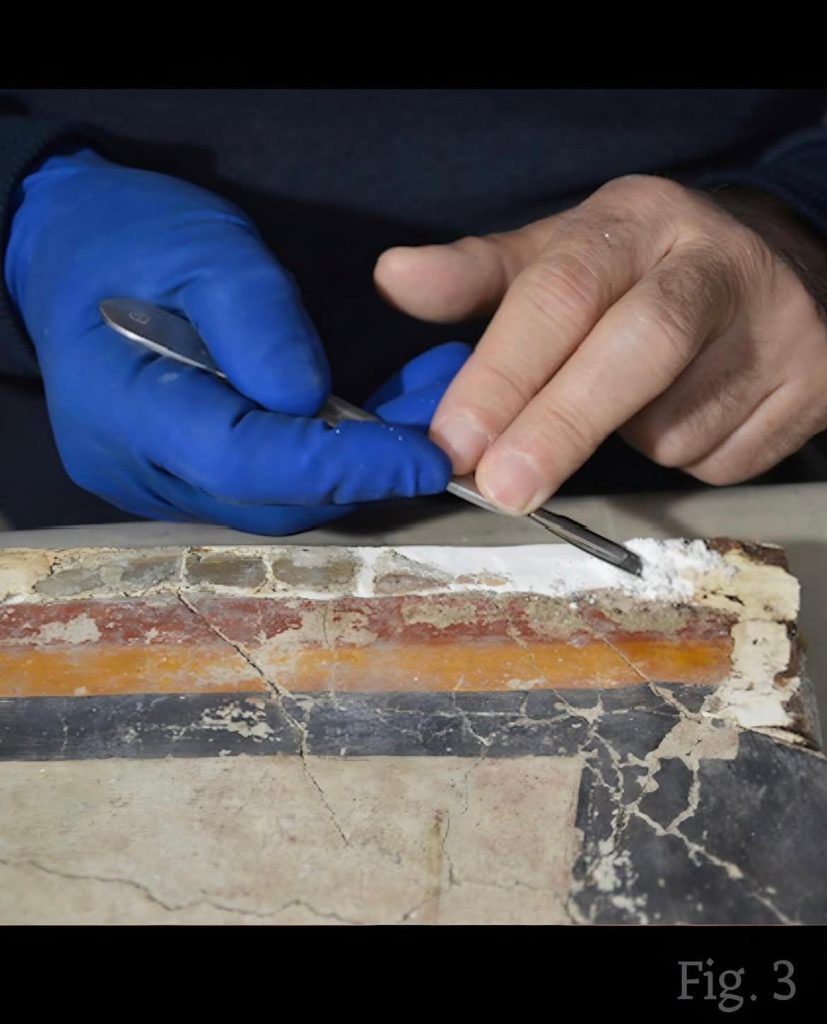
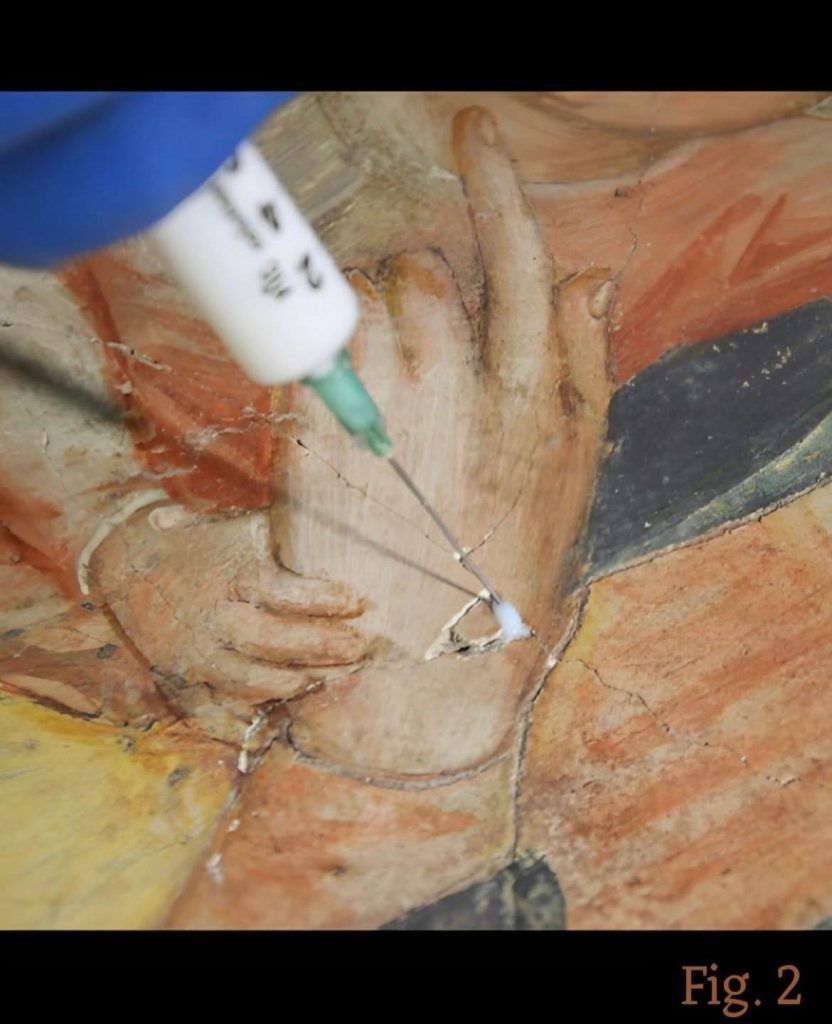
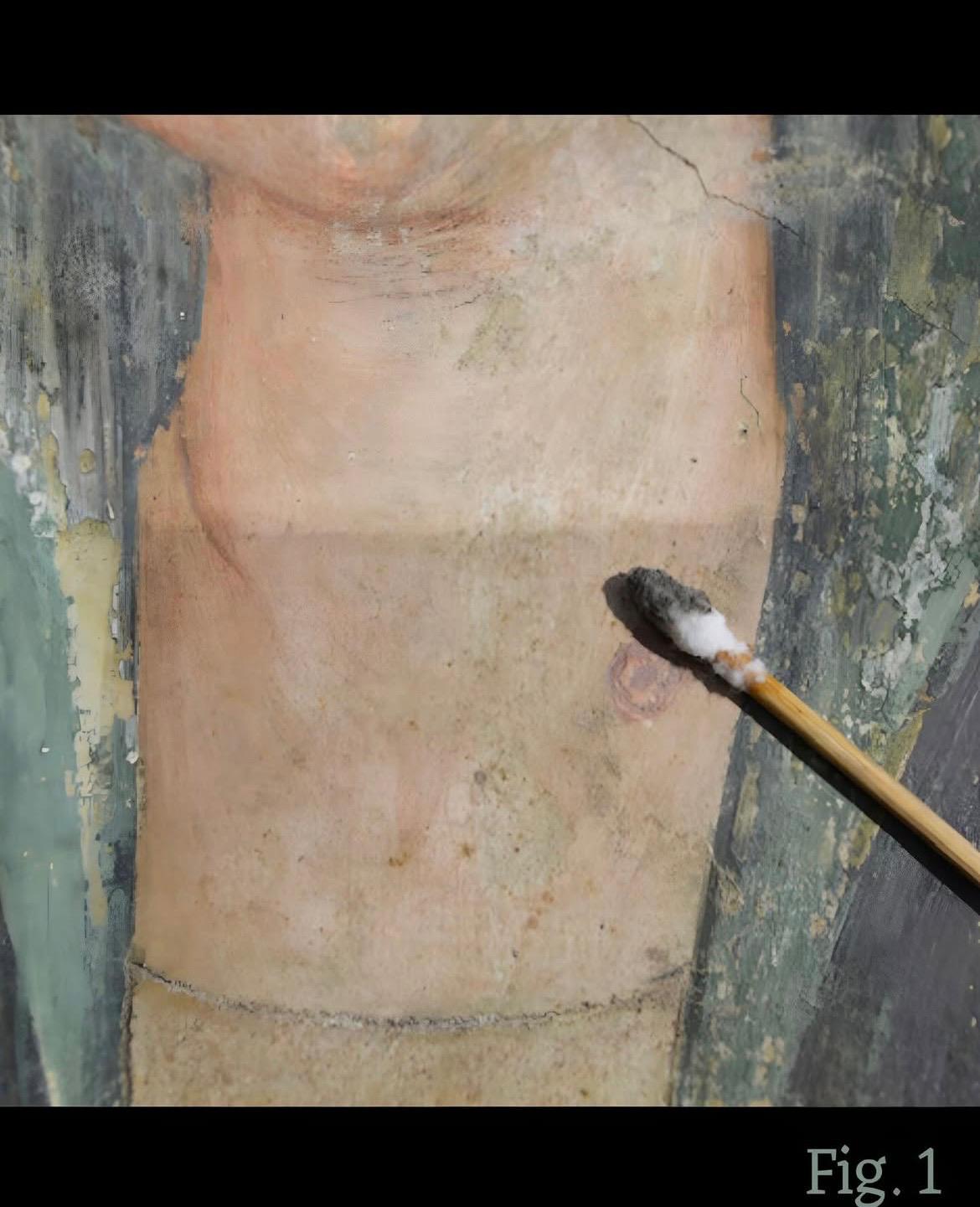
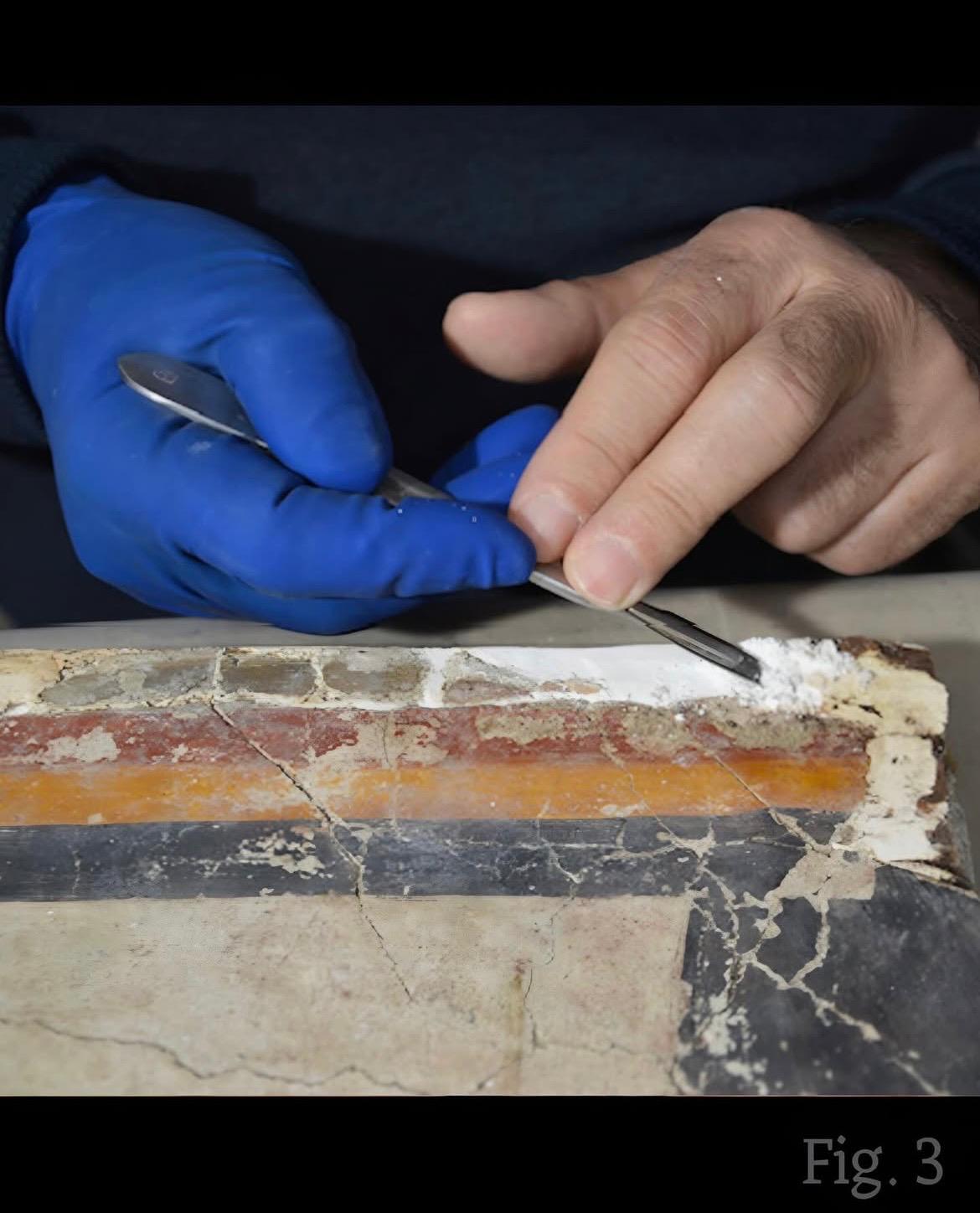
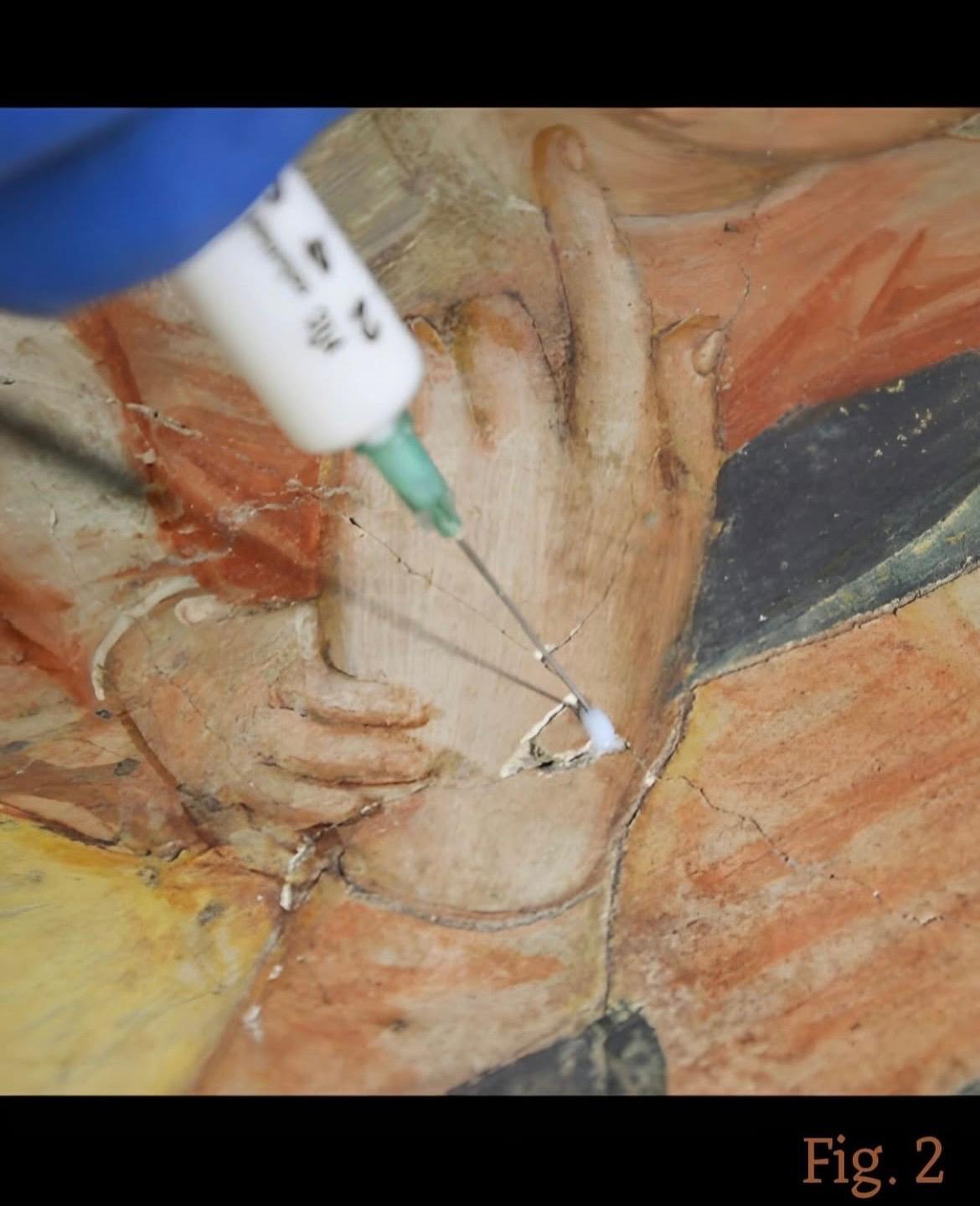
From a conservation perspective, the aim of the intervention was to stabilise the material, restore the image to its proper legibility and ensure better long-term preservation. The work was carried out in several stages: cleaning the painted surface by removing overpainting that had encroached upon the original (Fig. 1); securing areas where the paint film had lifted and consolidating the preparatory layer (Fig. 2); and the removal of old gypsum fillings (Fig. 3), which distorted the correct perception of the work and were no longer compatible with current conservation requirements.
The painting was then transferred onto a new honeycomb support, which is more stable and better suited to the test of time. The process then involved filling the gaps and cracks in the paint film, colour-matching the fillings, and evening out the abrasions on the painted surface, in order to restore visual unity without artificial intervention, whilst fully respecting the work and its history.
To complete the restoration work, the fresco was returned to its gilded frame, which had also been restored: an element that is not merely a ‘decoration’, but an integral part of the work’s presentation, serving to enhance its presence and complement its interpretation.
The Madonna del Solletico thus reappears with renewed clarity, whilst keeping her message intact: a sacredness that does not alienate, but welcomes; a devotion that is expressed even through a gentle gesture; a beauty that stands the test of time when it is cared for, studied and protected.
A magnificent work of art, a major restoration, and a new opportunity to experience — at close quarters — a precious fragment of our history.