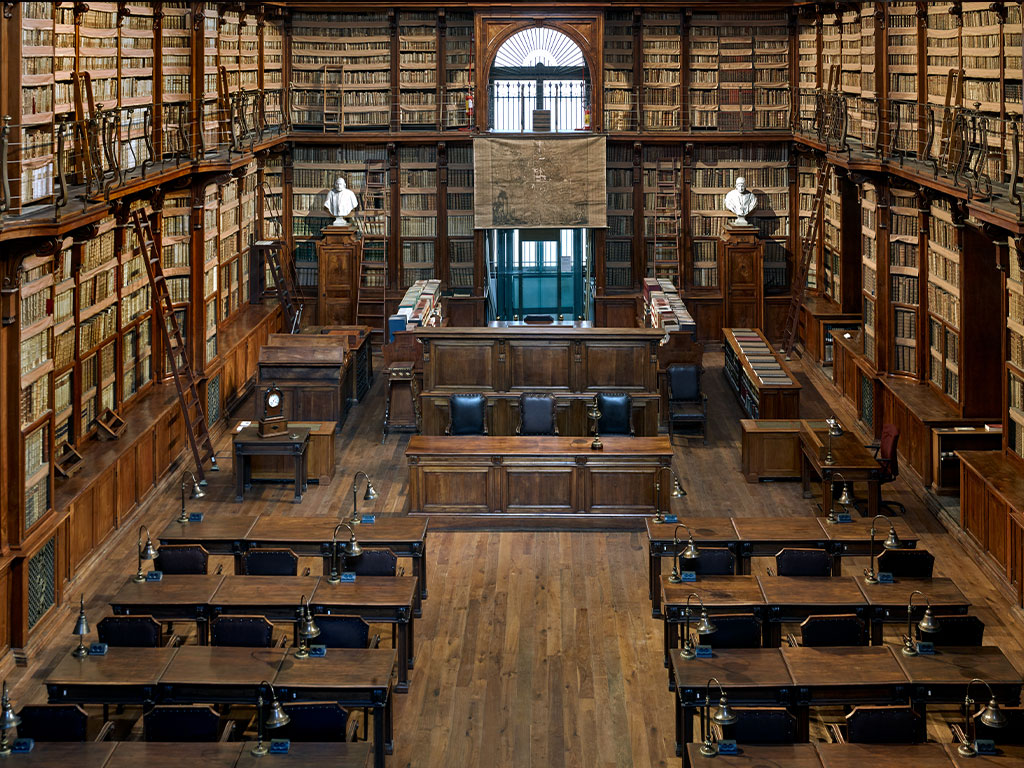
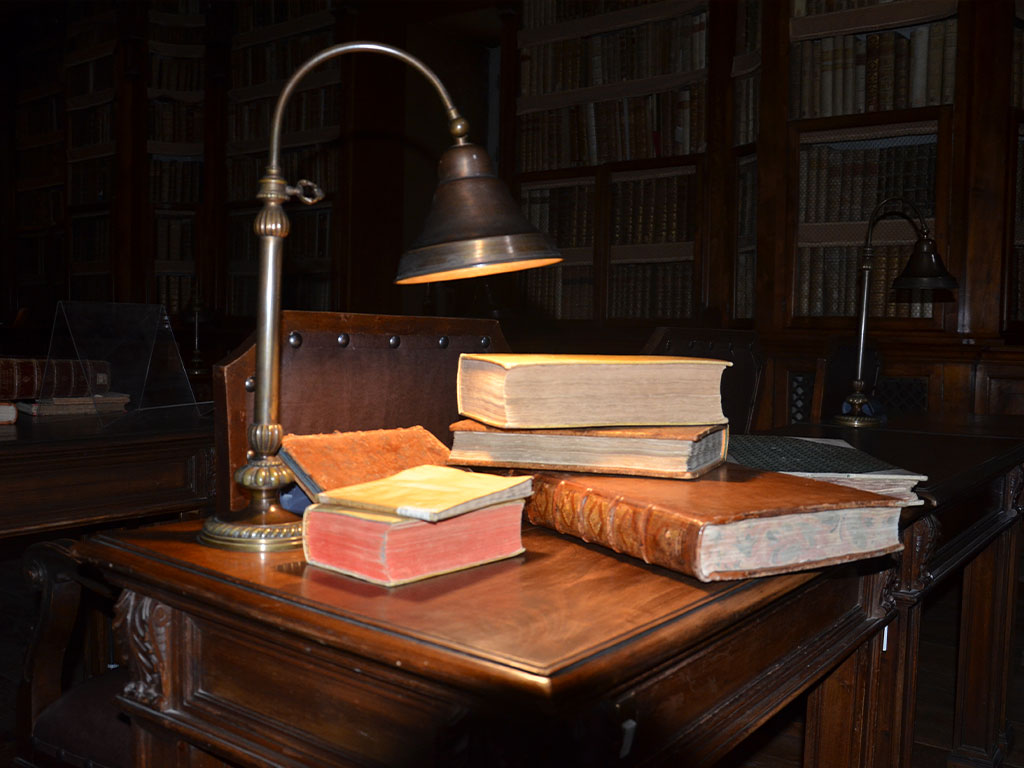

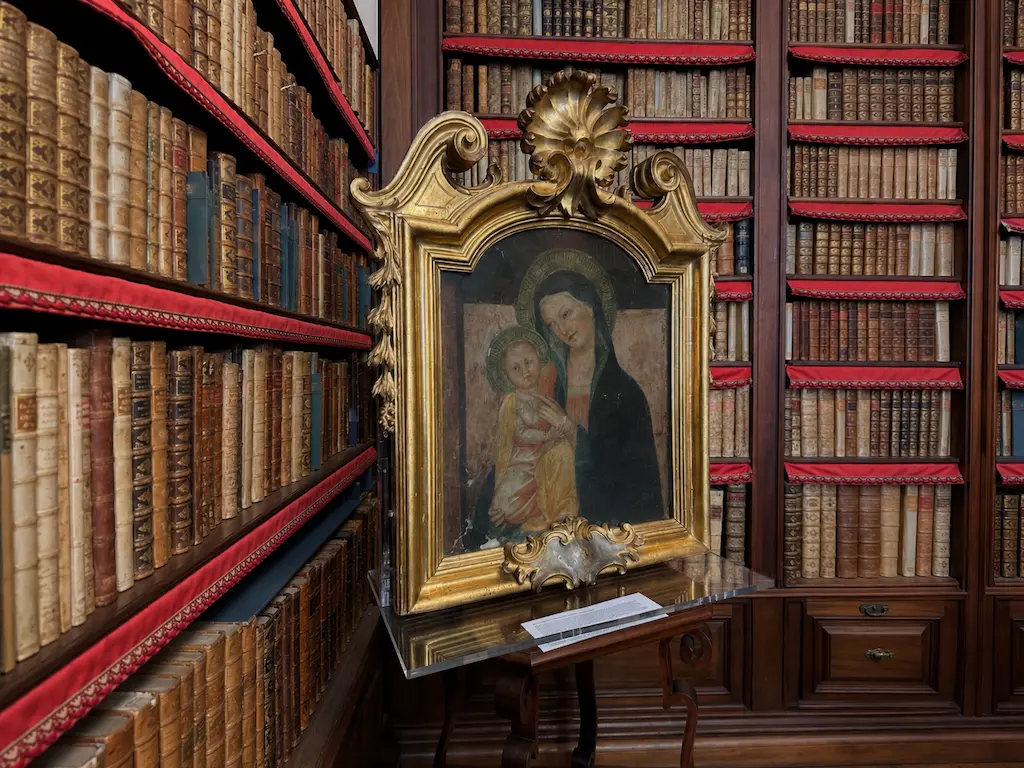



The Angelica Library possesses, within its ancient library holdings, an important collection of opera librettos, valuable evidence of the musical culture of some local Italian realities between the 18th and 19th centuries.
The librettos constitute the most substantial and interesting part of the Santangelo Miscellany, a collection originating from the ancient Neapolitan Santangelo family (Nicola Santangelo, Busso 1754 – Naples 1851), which contains, in addition to the librettos, theatrical works of various kinds.
It is not possible to establish the date of acquisition with certainty, but it may be assumed that the entire collection came to the Angelica Library during the period when management passed from the Augustinians to the Italian State, around the second half of the 19th century.
The librettos, once acquired, were bound together with the comedies, tragedies and even translations of French dramas, which together constitute the drama section.
The 954 opera librettos according to format and broadly by subject were collected in volumes and finally placed in the so-called "Friars' Room."
The collection consists of 1987 specimens. The works marked with no. 1931 in no. 1984, constitute a separate section preserved in the Rare Miscellany.
The texts date from a historical period spanning the first half of the 18th century to the first half of the 19th century: the oldest libretto, Lo cecato fauzo, dates from 1719, whilst the most recent is Cleopatra from 1879.
Within the theatre section, a distinct category is formed by the collection of around 60 comedies, farces and one-act plays written for the Neapolitan Pulcinella mask; these texts are of significant documentary value as they are closely linked to distinctive aspects of southern Italian culture.
The oldest comedy in the collection is an anonymous play from 1803, La battaglia amorosa.
Most of the works were printed and performed in Naples and, as such, provide a significant insight into Neapolitan life and culture between the 18th and 19th centuries.
The more than 400 volumes of the Santangelo Collection – which comprise the remainder of the miscellany not included in the theatre section – offer, taken as a whole, an overview of 18th-century Neapolitan scholarship in both the scientific and literary fields.
For the most part, these consist of academic papers and memoirs, extracts from the proceedings of the Accademia Pontaniana, the Society of History and Antiquities, or the Accademia Ercolanese, in the form of pamphlets that rarely exceed 50 pages.
We find, in short, evidence of many aspects of the civic and literary life of Neapolitan society at the time: writings on jurisprudence in more than 40 volumes, political pamphlets and pamphlets on mathematical, physical and chemical sciences, 56 volumes of poetry and about 50 among works on archaeology and fine arts, as well as pamphlets on public economy and manufactures, medicine and surgery and many others on various subjects.
A particularly interesting section is the archaeology and fine arts collection.
These are the texts that express the spirit of the most representative exponents of the world of Neapolitan culture consisting of scholars and scholars of which the Santangelos, as owners of a much admired museum, were an active and interested part.
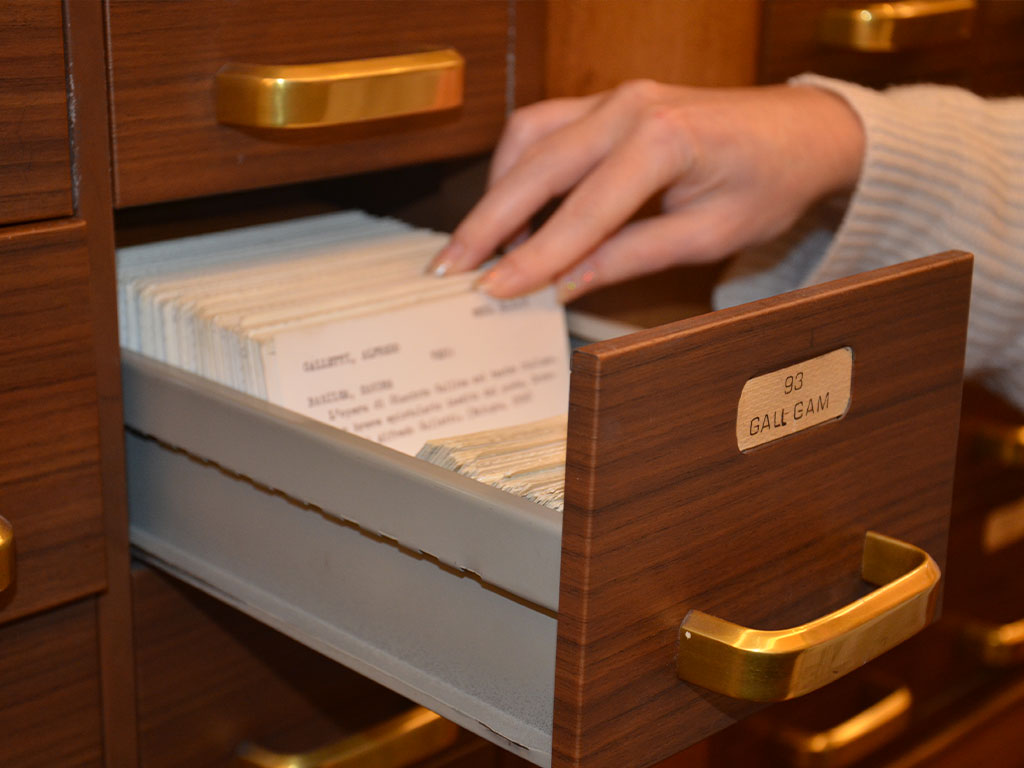
The opera librettos held by the Angelica Library are now available for online consultation.
Via the website of the Department of Cultural Heritage – DBC Alma Mater Studiorum, University of Bologna – CORAGO Project: http://corago.unibo.it/.
To access the descriptive records and reproductions, simply select the Angelica Library from the ‘Libretti’ search form at http://corago.unibo.it/libretti.